Sarah Withers: speaker on resilience, neuroinclusion, SEND and safeguarding
Ideas that challenges perspectives. Stories that shift understanding. Tools that change what happens next.
I’ve lived it
I’ve worked it
I’ve overcome it
I built a method to teach it.
Why Sarah?
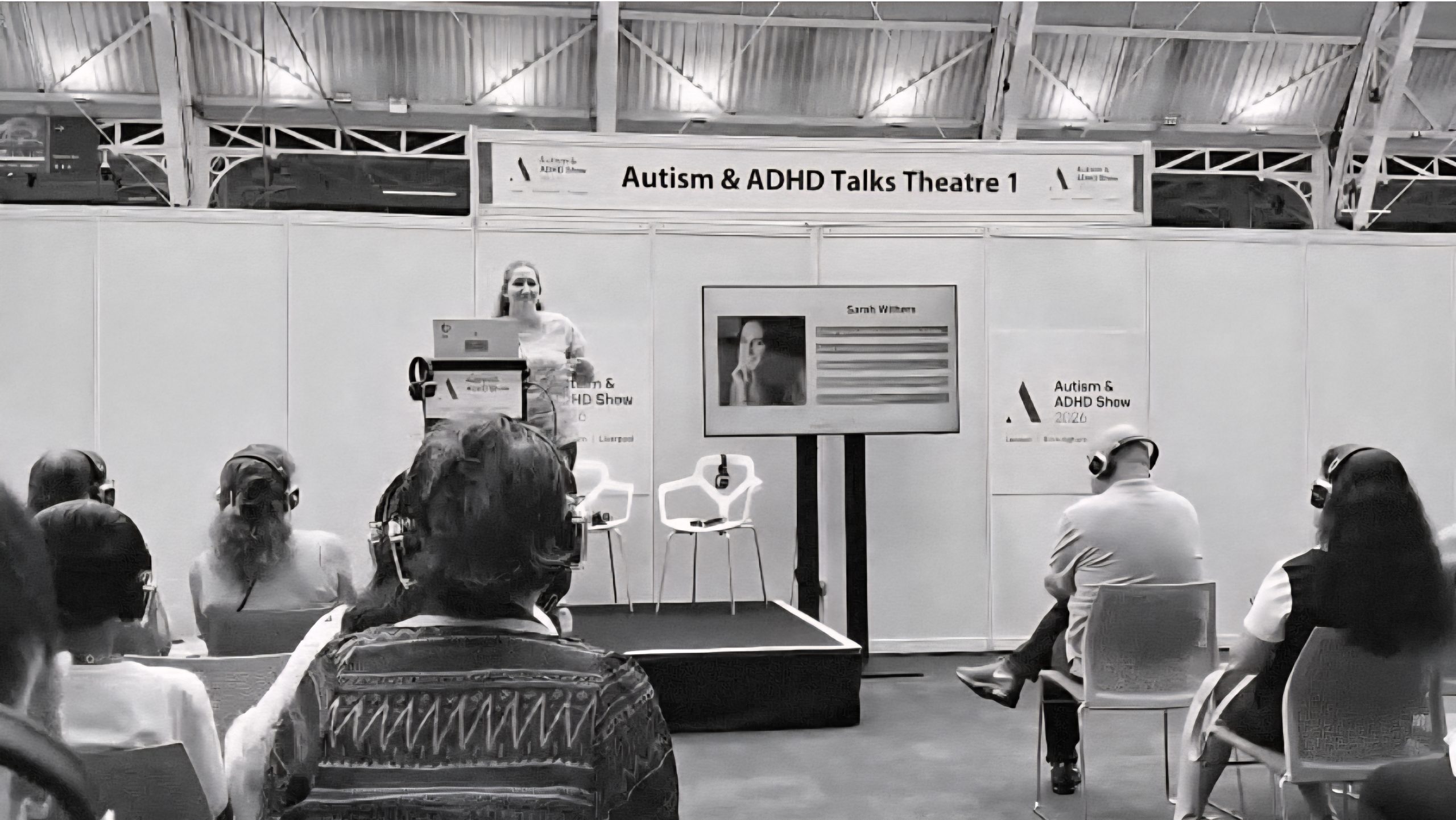
I speak about what happens when the world expects us to keep coping, keep conforming and keep going, even when the systems around us aren’t working, the pressure is unsustainable, or the cost of fitting in is losing ourselves.
Drawing on more than a decade in education, lived experience of adversity, disability and neurodivergence, and years of advocacy across education, health, gender and community systems, I bring together powerful personal stories, practical frameworks and perspectives that challenge conventional thinking.
From resilience and identity to neuroinclusion, behaviour and safeguarding, my work helps audiences see familiar problems differently and understand what they can do next.
If you’re looking for a speaker who will change the temperature of a room, let’s talk.
Formats
Adaptability: All sessions are available in person or online, and can be tailored to your audience and timings.
| Format | Length | Best for |
|---|---|---|
| Keynote | 20 – 45 minutes | Conferences, summits, awards, opening or closing sessions |
| Interactive talk | 30 – 60 minutes | School events, parent sessions, staff briefings |
| Workshop | 60 – 90 minutes | Practical, hands-on learning for teams and practitioners, or students |
| Training | Tailored | Professional development for schools and organisations |
| Panels | Flexible | Resilience, neuroinclusion, SEND, safeguarding and lived experience |
Talks
For workplaces, women’s events and leadership or resilience conferences and summits
The Duck’s Back Method™: Resilience Without Losing Yourself
You can survive almost anything. But what does it cost you to keep coping?
At thirty, newly single and caring for my three-month-old baby, I was told my heart was failing and I should write my will as I could be dead in a year.
I wrote my bucket list instead.
Since then, I’ve travelled, explored and built a life alongside significant health challenges, including heart failure, an implanted defibrillator and days when getting off the sofa isn’t possible. Before and since I’ve faced many other struggles from homelessness, poverty, domestic abuse, discrimination and racism, disability, and much more. I’ve learned that resilience isn’t about pretending you’re fine, pushing through everything or waiting for life to become easier. It’s about learning how to respond to adversity without abandoning yourself in the process.
Through my signature Duck’s Back Method™ (PREEN, SHED, SHAKE and RETURN), I offer audiences a practical framework for recognising pressure, separating problems from the burdens we add, creating space to respond and deciding what comes next.
This isn’t another message about being stronger. It’s about understanding when to persevere, when to adapt, when to ask for help, and when to stop carrying what was never yours to carry.
Audiences leave with:
- A practical framework for responding to pressure and setbacks
- Tools to distinguish resilience from simply enduring
- A fresh perspective on boundaries, identity and personal agency
- The confidence to build a meaningful life without waiting for perfect circumstances
Available as a keynote or an extended, practical workshop.
For neurodivergent adults, autism and ADHD events, and inclusion programmes
Weird, Wonderful and Authentically Me
What if the person you’ve worked so hard to become acceptable as isn’t the person you most want to be?
For many neurodivergent people, learning to fit in begins so early that masking becomes almost automatic. We study the rules, adapt our behaviour, hide what feels different and become skilled at giving the world the version of ourselves it expects.
But what happens when the effort to belong starts to obscure who we are?
Drawing on lived experience and professional understanding, this talk explores identity, masking, self-acceptance and the difference between adapting to a situation and feeling compelled to perform a version of yourself.
Authenticity doesn’t mean abandoning every strategy that helps you navigate the world. It means developing greater understanding, choice and confidence in how you show up, without treating your underlying identity as something that needs fixing.
Audiences leave with:
- A deeper understanding of masking and its potential costs
- A more compassionate perspective on their own differences
- Practical ways to recognise their needs, preferences and boundaries
- Permission to explore authenticity on their own terms
For parents, schools and SEND professionals
Wiring, Not Willpower: Understanding Behaviour and Responding Differently
What if the behaviour you’re trying to change is telling you something you haven’t yet understood?
When a neurodivergent child struggles to comply, communicate, transition or regulate their emotions, it’s easy to focus on the behaviour we can see. But behaviour doesn’t happen in isolation, and the same outward response can have very different causes.
Drawing on more than a decade in education and lived experience of neurodivergence, this talk challenges the assumption that children simply need more discipline, motivation or willpower. It explores how differences in processing, communication, sensory experience, emotional awareness and demand can influence what a child is able to manage, and why understanding the individual matters more than reaching for a one-size-fits-all response.
The focus is not just on understanding why a child struggles, but on what adults can do differently.
Audiences leave with:
- A more informed way to interpret behaviour
- Greater awareness of the factors that may contribute to distress and dysregulation
- Practical approaches to communication, expectations and support
- A shift from asking “How do I make this child comply?” to “What is happening here, and what might help?”
Want practical strategies for the difficult moments themselves? See Rewire the Reaction, my accompanying training.
When the System Doesn’t Fit the Child
For parents, schools, education leaders and policymakers. Available in two tailored versions.
Sometimes the question isn’t why a child won’t fit the system. It’s whether the system is meeting the child’s needs.
When education becomes a source of distress rather than an opportunity to learn, families can find themselves navigating conflicting advice, misunderstood behaviour and support that doesn’t address the underlying problem.
Drawing on my experience as a former teacher, school governor, advocate and parent home-educating my neurodivergent daughter, I explore what happens when a child’s needs and the education on offer are no longer aligned. This talk looks beyond simplistic debates about attendance, behaviour and parental choice. It asks what meaningful inclusion looks like in practice, how adults can recognise when existing approaches aren’t working, and what needs to change when a child cannot thrive within the provision available.
VERSION A: When School Isn’t Working: Understanding the Child and Finding a Way Forward (For parents and practitioners)
A practical, informed session for those trying to understand why a child is struggling and what options might help. It explores educational fit, recognising unmet needs, constructive advocacy, and the questions families and professionals should be asking when conventional approaches aren’t working.
Audiences leave with greater clarity, useful language for difficult conversations, and a better understanding of possible ways forward.
VERSION B: Both Sides of the Table: What Families Are Living That Your Statistics Don’t Show (For school leaders, policymakers and public-sector professionals)
Policies, performance measures and professional processes tell part of a story. The experiences of the families living with their consequences tell another.
Having worked within education and governance, and experienced systems as a parent, advocate and patient, I bring a perspective that crosses professional and personal boundaries. This talk examines the gap between policy and practice, what can be missed when lived experience is reduced to data or process, and why meaningful reform requires more than good intentions on paper.
Audiences are challenged to examine assumptions, listen differently and consider what needs to change for systems to work better for the people they serve.
For young people
The Pause Menu: Don’t Let One Moment Define You
For secondary schools, SEND settings, youth organisations and young people. Neurodivergence-informed and suitable for mixed audiences.
You can’t always choose what you feel. You can learn to influence what happens next.
When emotions run high, the gap between feeling something and acting on it can seem almost non-existent. A frustrating comment, a perceived injustice or an overwhelming situation can trigger a response before there’s time to consider the consequences.
The Pause Menu gives young people a simple, memorable way to think about that moment. Accessible, engaging and full of situations teenagers recognise, the session explores what’s happening when we react, how to create space before responding, and how to choose what they want to happen next. It also recognises that some reactions come from overload rather than choice, and gives young people a shame-free way to ask for space.
The aim isn’t to suppress emotions, demand perfect behaviour or make young people feel that being different is a problem. It’s to build understanding, agency and choice, while recognising that adults and environments also have a responsibility to support them.
Young people leave with:
- One memorable tool for difficult moments
- Greater awareness of the choices available to them
- Practical ways to pause, ask for space and consider consequences
- The message that they are not their worst moment
Available for neurodivergent groups or adapted for whole-year-group delivery, as a talk or an interactive workshop.
I Thought They Were My Friends
For schools, youth organisations and young people aged 16+, adaptable for 14+.
Exploitation doesn’t always begin with a threat. Sometimes it begins with feeling wanted.
Recognising grooming and exploitation can be difficult when the relationship initially feels like friendship, loyalty, protection or belonging.
This interactive, lived-experience session explores how harmful relationships can develop, how trust can be used to establish control, and why exploitation can be so difficult to recognise while you’re caught up in it. Through realistic scenarios, discussion and practical activities, young people examine relationship dynamics, recognise warning signs and consider how to seek help safely, without shame or blame.
Participants leave with:
- Greater awareness of how grooming and coercion can develop
- A better understanding of how relationships can be manipulated
- Practice recognising warning signs in realistic scenarios
- Clear routes to support and signposting
Sensitive, accessible and focused on awareness, safety and help-seeking, not judgement.
Training & Workshops
For teachers, teaching assistants, parents, SEND teams and education professionals.
Rewire the Reaction: Practical Strategies for Supporting Neurodivergent Children
Understanding why a child is distressed is important. Knowing what to do in the moment can be just as important.
Rewire the Reaction extends the ideas in Wiring, Not Willpower into practical, method-focused training. It helps adults reflect on their own responses, adapt communication and expectations, and explore approaches that support children through difficult moments.
The emphasis is on understanding the child, reducing avoidable pressure, and responding in ways that protect dignity and relationships while supporting safety and regulation. This isn’t a promise of a universal technique that will stop every meltdown. It’s a more thoughtful, flexible and practical toolkit for the realities of supporting neurodivergent children.
Available as professional development, an interactive workshop, or a tailored session for parents and staff.
For school staff, SEND teams and leadership. Half-day, or two one-hour sessions.
Designing the Neuroinclusive Classroom
Small changes to the environment, routines and communication can make the difference between a child who is just about coping and a child who is able to learn.
This practical workshop helps staff look at their classroom and practice through a neuroinclusive lens: sensory environment, transitions, instructions and demands, attention and interests, and how children show they’re struggling. Staff work on their own settings and leave with realistic changes they can make straight away, without specialist resources or extra workload.
Staff leave with:
- A clear understanding of what makes a learning environment neuroinclusive
- An audit of their own classroom or setting
- Practical, low-cost changes to try immediately
- Shared language and approaches across the team
Also available for youth organisations and community settings, adapted for spaces beyond the classroom.
Beyond the Keynote
I also contribute to expert panels, roundtables, radio/podcasts, and discussions on neuroinclusion, SEND reform, education, disability, resilience, and the lived experience behind public policy.
My work brings professional experience and lived experience into the same conversation: challenging assumptions, asking better questions, and helping organisation consider what meaningful change looks like in practice.
